

 See My Latest Article on HelloNation
What makes a vacation rental feel like home?
A vacation rental feels like home when guests can quickly understand the space, find what they need, and maintain familiar routines. Comfort usually comes from practical details rather than expensive decoration: a good night’s sleep, a usable kitchen, enough storage, reliable temperature control, and clear information.
For residents preparing a rental in Broken Bow, OK, the goal is to create a space that feels welcoming without becoming crowded with personal belongings or unnecessary features. Guests may arrive after a long drive, spend much of the day outdoors, or settle in for a quiet stay. The rental should support all of those uses.
How should the entry area be arranged?
The entry should make arrival simple. Guests need a clear place to set down bags, remove shoes, hang jackets, and locate basic instructions.
A small bench, a few sturdy hooks, and an open surface for keys can make the first few minutes less stressful. If the property has an outdoor setting, guests may also return with damp footwear, muddy clothing, or equipment from hiking and other activities. A washable mat and a designated drying area can help protect floors and keep clutter contained.
Avoid filling the entry with fragile decorations. A clear path from the door to the main living area is more useful than an elaborate display.
What furniture helps guests relax?
Furniture should support both conversation and quiet time. A comfortable sofa, supportive chairs, and properly sized tables allow guests to eat, read, play games, or spend time together without rearranging the room.
Choose pieces that are sturdy, easy to clean, and appropriate for the number of people the rental accommodates. Oversized furniture can make a room feel crowded, while too little seating can leave guests gathering on beds or dining chairs.
Useful living-room features include:
- A coffee table with enough room for drinks and games
- Side tables near seating
- Lamps that provide softer light than ceiling fixtures
- A mix of seating for groups and individual use
- Open floor space for luggage and movement
A few personal touches, such as local landscape art or simple natural materials, can add character. Too many themed decorations may make the space feel staged rather than comfortable.
How can a rental bedroom provide better sleep?
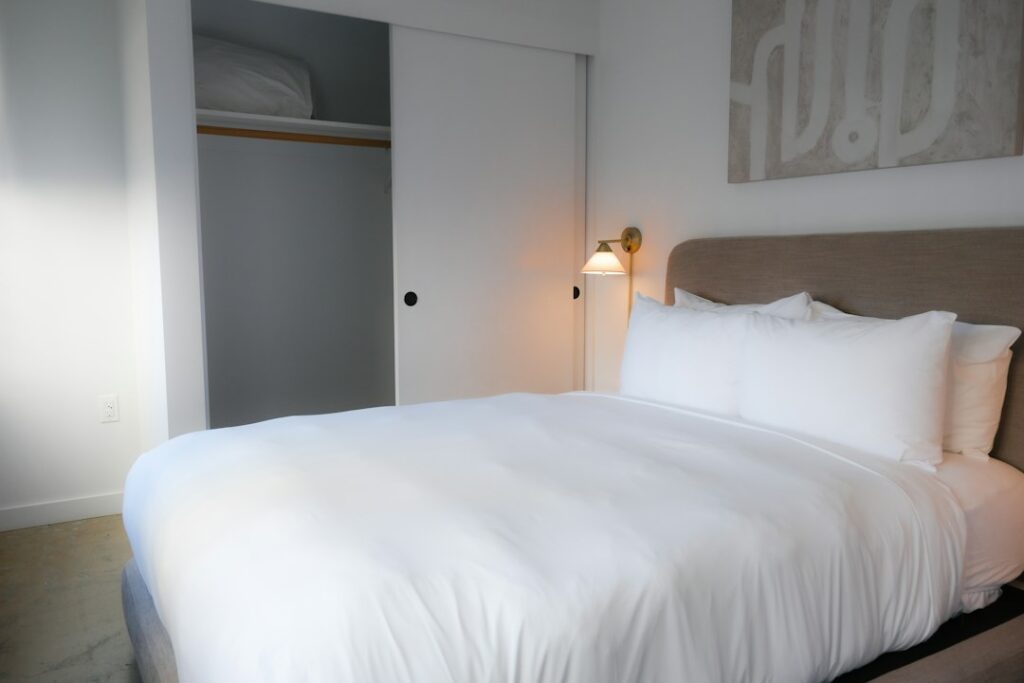
Sleep quality is one of the strongest influences on a guest’s experience. A clean, supportive mattress and pillows in different firmness levels are more valuable than decorative bedding.
Use breathable sheets, a washable comforter or blanket, and window coverings that provide privacy and control early-morning light. Bedrooms should also have a convenient place for phones, glasses, and water. A bedside lamp with an accessible switch is helpful, especially for guests unfamiliar with the room.
Noise can affect rest even in a peaceful rural setting. Heating and cooling equipment, ceiling fans, plumbing, wildlife, and nearby outdoor activity may all be noticeable at night. Soft furnishings and properly fitted doors can reduce some interior noise. Clear guest information can also set realistic expectations about the surrounding environment.
What kitchen supplies do guests actually need?
A kitchen feels useful when guests can prepare a simple breakfast, store leftovers, and make a complete meal without searching through mismatched supplies. The basics should be easy to locate and available in quantities that match the rental’s occupancy.
A practical kitchen generally includes:
- Pots, pans, baking sheets, and heat-resistant utensils
- Sharp knives and a cutting board
- Plates, bowls, glasses, mugs, and flatware
- Measuring cups and spoons
- A can opener, bottle opener, and kitchen scissors
- Food storage containers
- Dish soap, clean sponges, towels, and trash bags
- Basic cooking staples such as salt and pepper
Do not assume every guest will eat at restaurants or bring supplies from home. Families may want to prepare meals, and longer stays often require more kitchen use. At the same time, excessive gadgets can take up valuable cabinet space and make it harder to find everyday items.
How should bathrooms be stocked?
Bathrooms should be clean, well-lit, and easy to use. Guests typically need enough towels for bathing and handwashing, along with a place to hang them between uses.
A simple supply setup may include:
- Bath towels, hand towels, and washcloths
- A nonslip bath mat
- Toilet paper beyond the minimum amount
- Hand soap
- A small wastebasket
- A hair dryer or other basic convenience items, if provided
- Hooks or rails for drying towels
Good ventilation matters in a humid climate. Moisture can linger after showers, especially during warmer months, so exhaust fans should work properly and be clearly operated. Loose fixtures, slow drains, peeling caulk, and weak water pressure can make a bathroom feel neglected even when it is clean.
What temperature and lighting details improve comfort?
Guests should be able to control the indoor environment without having to guess. Instructions for heating, cooling, ceiling fans, fireplaces, and other equipment should be brief and placed where they can be found.
Broken Bow has seasonal changes that can affect comfort, including warm summers, cool nights, and winter weather that may require dependable heating. A rental should be checked for drafts, uneven room temperatures, and doors or windows that do not close securely.
Lighting should include several levels:
- Bright lighting for cooking and cleaning
- Focused lighting for reading or working
- Softer lighting for evenings
- Exterior lighting near entrances and walkways

Avoid relying only on overhead lights. Lamps help guests create a more relaxed atmosphere and make unfamiliar rooms easier to navigate at night.
How much storage should be available?
Guests need room to unpack, even for a short stay. A few empty drawers, open closet space, and sturdy hangers help prevent clothing from remaining in suitcases.
Storage should also be practical in the kitchen and bathroom. Clear a portion of the refrigerator, pantry, bathroom counter, and shower area for guest use. Lock personal supplies and maintenance items away from guest spaces rather than leaving them in visible cabinets.
A rental does not need extensive built-in storage. It does need enough open space to prevent everyday belongings from spreading across tables, beds, and floors.
Which personal touches feel welcoming without becoming clutter?
Personal touches work best when they are useful or create a calm sense of place. Examples include a small selection of books, family-friendly games, extra blankets, local weather information, and a simple guide explaining how the home operates.
Avoid displaying private photographs, valuables, political materials, or fragile collections. Guests should feel comfortable using the space without worrying that they might damage something important.
Natural textures, neutral colors, and durable fabrics tend to work well in vacation rentals because they create warmth while remaining easier to maintain. A few carefully chosen items are usually more effective than decorating every surface.
What information should be available inside the rental?
Clear instructions reduce uncertainty and prevent avoidable problems. Guests should not have to search through multiple drawers or send repeated messages to learn basic household information.
A short house guide can explain:
- Wi-Fi access
- Heating and cooling controls
- Trash and recycling procedures
- Parking and outdoor-area expectations
- Fireplace, grill, hot tub, or appliance instructions
- Emergency information
- Check-out steps
- What to do if something stops working
Instructions should be accurate, current, and written in plain language. If a feature is seasonal or weather-dependent, explain that directly. Outdoor conditions can change quickly, so guests benefit from knowing which areas may become slippery, muddy, or difficult to access after rain or freezing temperatures.
How can cleanliness support a homelike atmosphere?
A home-like rental must still feel thoroughly clean. Comfort declines quickly when guests notice odors, hair, dust, stained linens, dirty dishes, or neglected high-touch surfaces.
Cleaning should include less obvious areas such as light switches, remote controls, cabinet handles, mattress protectors, outdoor furniture, and the space beneath beds. Soft items should be washed regularly, and supplies should be replaced before they run out.
The most effective standard is consistency. Guests should find the same level of cleanliness in the kitchen, bedrooms, bathrooms, living areas, and outdoor spaces.
What is the most common mistake?
The most common mistake is designing for appearance instead of daily use. A rental may look attractive in photographs but still feel uncomfortable if guests lack bedside outlets, cannot find a trash can, have nowhere to place luggage, or are unsure how to operate the heating system.
Before welcoming guests, walk through the rental as if arriving for the first time. Carry bags, prepare a meal, take a shower, adjust the temperature, sit in every chair, and try to sleep without relying on assumptions. This practical test often reveals small changes that make the space more intuitive, restful, and genuinely livable.